
How Spravato Treatment Works for Depression
How Spravato Treatment Works for Depression

Depression can be exhausting when the usual treatments are not helping enough. Many adults try therapy, antidepressants, lifestyle changes, or several medication options and still feel stuck with symptoms that interfere with work, relationships, sleep, and daily routines.
For adults in Brookfield, CT who are dealing with treatment-resistant depression, Spravato treatment may be worth discussing with a qualified psychiatry provider. Spravato is not a first step for depression care, but it may be considered when other treatments have not provided the relief a person needs.
Apex Interventional Psychiatry LLC offers psychiatry services for adults who need a deeper look at their depression treatment plan. Understanding how Spravato works, what to expect during appointments, and how it fits with other care options can help you make a more informed decision.
What Is Spravato Treatment?

Spravato is the brand name for Esketamine, a prescription nasal spray used under medical supervision for certain adults with treatment-resistant depression. It is different from traditional antidepressants because it acts on glutamate pathways in the brain rather than only focusing on serotonin, norepinephrine, or dopamine.
Traditional antidepressants can be helpful, but they often take several weeks to show results. Spravato treatment is designed for people whose depression has not improved enough after trying other medication options. It is typically used along with an oral antidepressant as part of a monitored treatment plan.
For adults comparing next steps,
Spravato treatment in Brookfield, CT may be an option to review with Apex Interventional Psychiatry LLC after a clinical evaluation.
Why Esketamine Is Different
Esketamine is related to ketamine but is a specific form of the medication that has been studied and approved for certain depression-related uses. Because it can cause temporary side effects like dizziness, sleepiness, dissociation, nausea, or increased blood pressure, it is not taken at home.
Instead, Spravato is given in a certified medical setting. Patients are monitored before, during, and after treatment to help keep the process safe and structured.
Who May Be Considered for Spravato
Spravato may be considered for adults who have treatment-resistant depression, meaning their symptoms have not improved enough after trying other antidepressant treatments. A provider will review your medical history, current medications, prior response to depression treatment, and safety factors before recommending it.
It is not right for everyone. People with certain medical conditions, substance use concerns, blood pressure issues, or medication interactions may need a different approach.
What Happens During a Spravato Appointment?

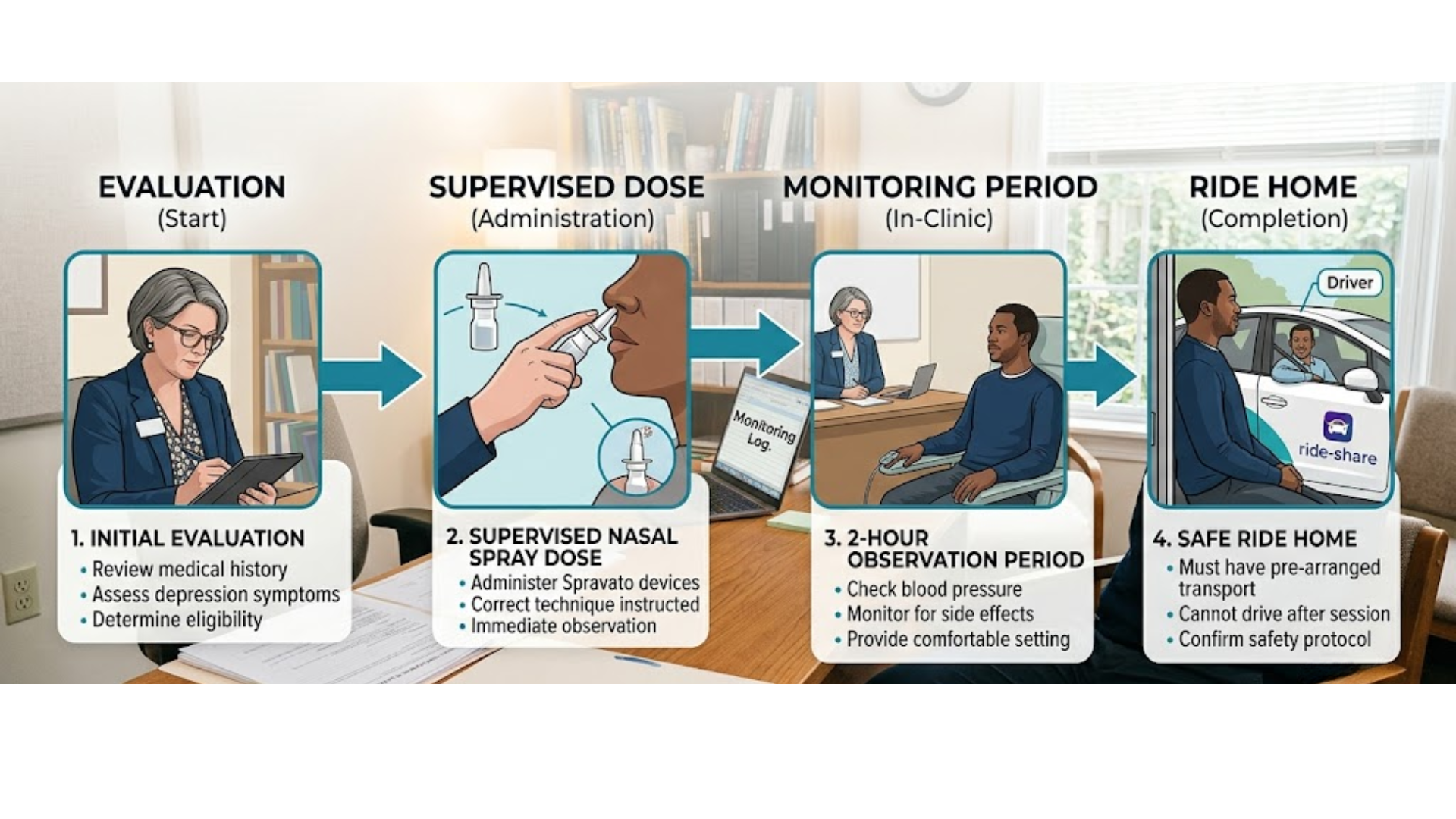
Spravato treatment is given as a nasal spray while the patient is at the treatment office. Before the dose, the care team may check blood pressure, review current symptoms, and confirm that the patient has transportation home.
After taking the medication, patients stay onsite for observation. This monitoring period is commonly about two hours, though the exact timing depends on the patient’s response and the provider’s clinical judgment.
The Treatment Visit Step by Step
A typical visit begins with a check-in and a brief review of how you have been feeling since the last appointment. The medication is then self-administered under supervision as a nasal spray.
During the observation period, patients rest in a controlled setting while the care team monitors for side effects. Some people feel detached, sleepy, lightheaded, or mildly nauseated during the session. These effects usually lessen before the patient leaves, but driving is not allowed after treatment.
Planning for Transportation and Recovery Time
Because Spravato can affect alertness and coordination, patients must arrange a ride home after each appointment. Most people are advised not to drive, operate machinery, or make major decisions until the next day after a full night of sleep.
This practical planning matters. For patients in Brookfield, building treatment visits into a weekly schedule can make the process easier to follow and less stressful.
How Spravato Fits Into a Depression Treatment Plan

Spravato is not usually a stand-alone treatment. It is often part of a broader psychiatry plan that may include an oral antidepressant, follow-up visits, symptom tracking, and adjustments over time.
A strong treatment plan looks at more than one symptom. It considers sleep, appetite, anxiety, concentration, mood changes, safety concerns, medical history, and how depression affects daily life.
Patients who need ongoing evaluation may also benefit from
psychiatry services in Brookfield, CT to help assess diagnosis, treatment response, and long-term care needs.
Medication Options Still Matter
Even when Spravato is being considered, other medication options may still play an important role. Some patients need changes to antidepressant dosing, a different medication class, or support managing side effects.
That is why psychiatric medication management is often part of care for treatment-resistant depression. A provider can review what has been tried, what helped, what caused side effects, and what should be adjusted.
For patients who need that level of support,
psychiatric medication management in Brookfield, CT can help organize the medication side of depression treatment.
Tracking Progress Over Time
Progress with depression treatment is not always dramatic at first. Some patients notice changes in mood, motivation, or emotional heaviness, while others may see smaller shifts in sleep, energy, or ability to function.
Your provider may use symptom check-ins, rating scales, and regular conversations to measure whether treatment is helping. If Spravato is not the right fit, that information can still guide the next step.
What Should Patients Know Before Starting Spravato?
Before starting Spravato treatment, patients should understand the commitment involved. The schedule can be more structured than taking a daily medication at home, especially early in treatment.
A provider will explain how often visits may be needed, what safety steps are required, and what side effects to watch for. Patients should also talk openly about medical conditions, pregnancy, substance use history, blood pressure concerns, and all current medications or supplements.
Safety Monitoring Is Part of the Treatment
Spravato is given under supervision because temporary side effects can happen during or shortly after the dose. Blood pressure may rise for a period of time, and some patients may feel sedated or disconnected from their surroundings.
This does not mean the treatment is unsafe for every patient. It means careful screening and monitoring are important parts of responsible care.
Other Options May Be Discussed Too
Spravato is one option for treatment-resistant depression, but it is not the only one. Some adults may be candidates for transcranial magnetic stimulation, changes in antidepressant strategy, or other psychiatry-based approaches.
For patients comparing interventional treatments,
transcranial magnetic stimulation in Brookfield, CT may also be worth discussing with a provider. The right option depends on diagnosis, prior treatment history, health factors, and personal preferences.
Why Brookfield Adults Are Asking About Spravato
Adults in Brookfield, CT often balance demanding work schedules, family responsibilities, and personal stress while trying to manage depression. When symptoms continue despite standard medication options, it can feel discouraging and isolating. Having access to Spravato treatment and psychiatry services in the Brookfield area gives patients a local place to ask informed questions, review their options, and consider care that fits their clinical needs.
Learn More About Spravato Treatment
Apex Interventional Psychiatry LLC helps adults learn more about Spravato treatment and other psychiatry options for treatment-resistant depression. To discuss whether this treatment may be appropriate for you, call 860-799-8344 and ask how to get started.
Frequently Asked Questions
How does Spravato treatment work for depression?
Spravato uses Esketamine, which acts on different brain pathways than many traditional antidepressants. It is used under medical supervision and is often combined with an oral antidepressant. A provider monitors the patient during each visit to watch for side effects and response.
Is Spravato the same as ketamine?
Spravato is not exactly the same as ketamine. It contains Esketamine, which is a specific form related to ketamine and is used as a prescription nasal spray in approved treatment settings. Your provider can explain how it differs from other ketamine-related treatments.
How long does a Spravato appointment take?
Many Spravato appointments require an observation period of about two hours after the medication is taken. The full appointment may vary based on the clinic process and how the patient responds that day. Patients need a ride home after treatment.
Who qualifies for Spravato treatment?
Spravato may be considered for adults with treatment-resistant depression who have not had enough improvement from other antidepressant medication options. Qualification depends on a clinical evaluation, medical history, current medications, and safety factors. A psychiatry provider can determine whether it is appropriate.
Can I drive after Spravato treatment?
No. Patients should not drive after a Spravato session. Because the medication can cause sleepiness, dizziness, or changes in perception, patients need transportation home and should follow the provider’s instructions about activities after treatment.
Depression that does not improve with standard treatment deserves careful attention, not blame or guesswork. Spravato treatment may be one possible path for adults with treatment-resistant depression, but the best next step is a thoughtful evaluation with a qualified provider. If you are in Brookfield, CT and want to learn more, Apex Interventional Psychiatry LLC can help you understand your options and decide what makes sense for your care.